By Poppy Benson, Outreach Chair
Audubon’s Christmas Bird Count (CBC) is the nation’s longest running citizen science project. It has produced over 100 years of data to provide a picture of the health of bird populations. Seven Alaska national wildlife refuges participated in Audubon’s Christmas Bird Count (CBC) even though the counting circles usually don’t include refuge lands. Some hosted potlucks after the count, others are the organizers and Kodiak had staff and volunteer teams. The relationship between birds, Audubon and the refuges goes way back to when the first refuges nationwide and in Alaska were created to protect birds. So, what did they find?
- Alaska Maritime Refuge – Homer; Record sea ice limited water bird sightings and the total numbers of individual birds counted (4,144 – ½ of last year), but 69 species were spotted by the 31 observers, more than the average of 65. Highlights were a first record for count day of a Wilson’s snipe, only the 3rd CBC sighting of a storm -petrel, 5 species of woodpeckers and 4 species of owls. The refuge hosted morning send off and post count potluck.
- Alaska Peninsula/Becharof Refuges – King Salmon; Four participants including one refuge employee turned out and found 18 species and 1698 birds about a third of which were red polls. In addition, biologist Jamie Welfelt is the organizing force and keeper of the data even though an out of state trip kept her from counting. Highlights were a hawk owl, northern shrike, trumpeter swan and Bohemian waxwings.
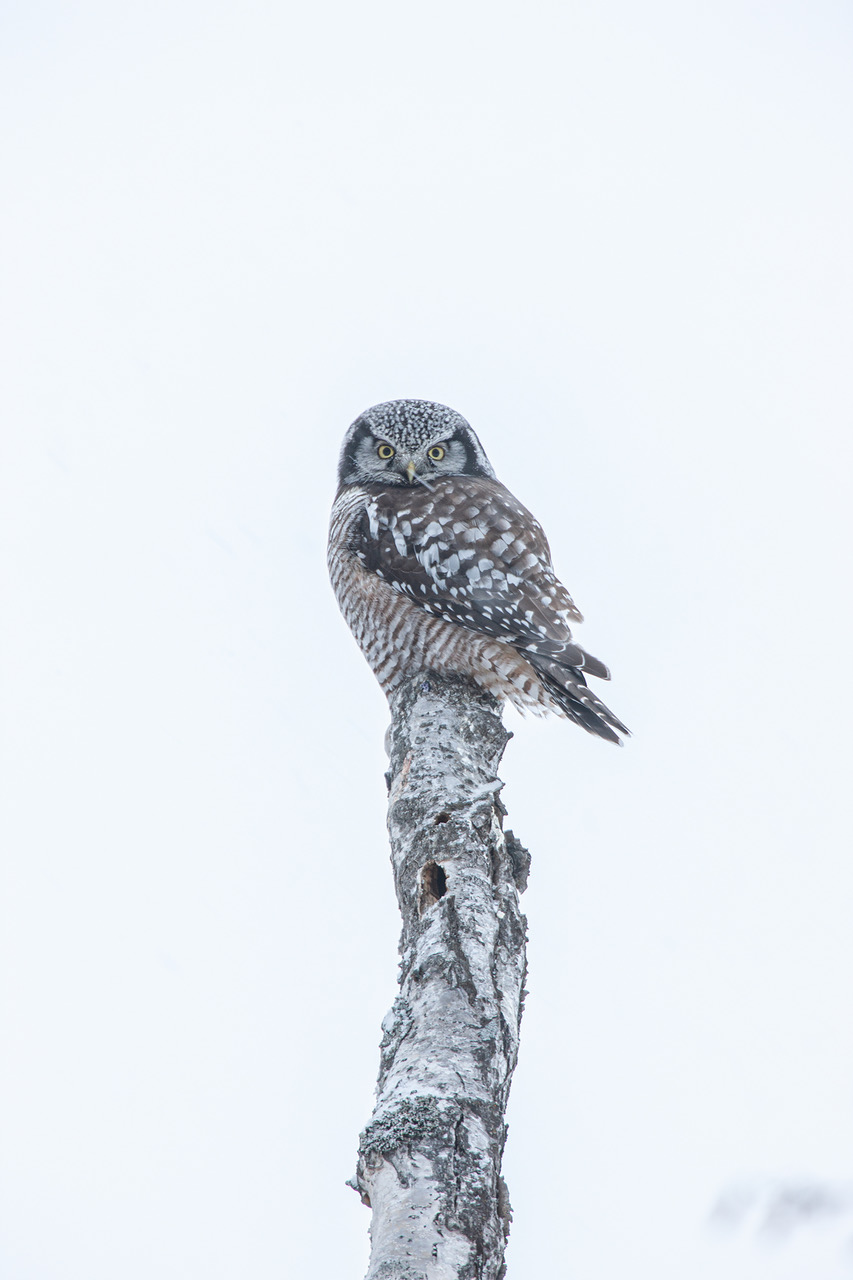
Hawk owl was an unusual find for King Salmon, headquarters of the Alaska Peninsula/Becharof Refuges. PC Mary Friesche and Tom Collopy/ North Wind Photography
- Kenai Refuge – Soldotna; final count data isn’t available. Extreme cold affected this count as well although the potluck at the refuge visitor center post count was warm. Two wrens and an unusual number of ravens were noted.
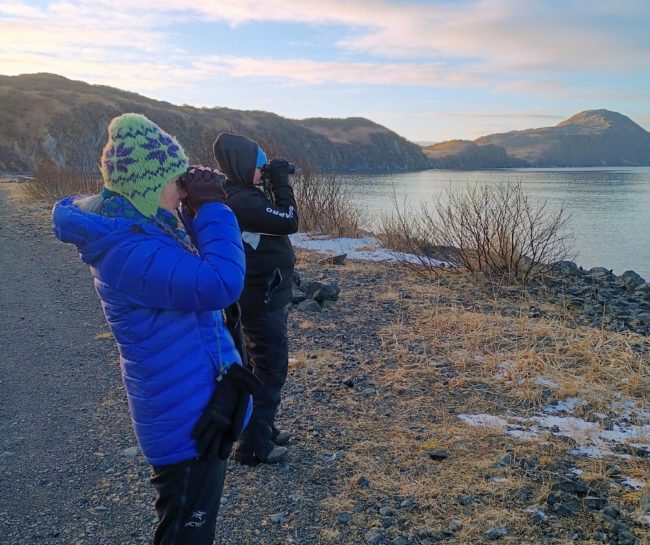
- Kodiak Refuge – Kodiak takes the prize for most species (74), most individual birds (10,504) and the most participants (74 includes 26 feeder watchers). High winds prevented boat and mountain observations and were undoubtedly responsible for both the number of species and individual birds being about 15% below average. Most common species with more than 1000 birds each were emperor goose, mallards and greater scaup. Less common sightings were trumpeter swans and snow goose.
- Koyukuk/Nowitna Refuges – Galena; Extreme cold of minus 35 on count day limited bird activity so the two counters, both refuge employees, allowed a second day of counting when it was only minus 18. They found 5 species. 1 counter reported 7 birds. Ruffed grouse (called willy chickens locally because of their white meat) are increasing around town and that is believed to be tied to the snowshoe hare cycle which is also high.
- Tetlin Refuge – Tok – a long streak of minus 55 degree days meant few birds on the move at Tetlin although it had warmed to minus 20 by count day. 6 species and 50 birds were counted by the 5 counters including 1 feeder watcher organized by the refuge and supplied with loaner binoculars. Ravens and boreal chickadees were the most common birds.
- Yukon Delta Refuge – Bethel; 8 groups of counters organized by the refuge found 10 species for a total of 125 birds plus an unknown number of ravens. Pine siskins were an uncommon bird for count day. Bryan Daniels, refuge biologist, thought they should have seen more chickadees, redpolls and grosbeaks given the good weather.
The Christmas Bird Count began in 1900 as an attempt to replace the “Christmas side hunt”, a competitive event with the goal of killing as many birds as possible, with something that would help birds not kill them. From small beginnings the new event took hold. The data collected by observers over the past century allow for study of the long-term health and status of bird populations.
Above: Kodiak with its open marine waters, relatively mild climate and strong local Audubon saw the most species, most birds and had the most counters. PC: Isabel Justiniano Iriarte