By: Poppy Benson, Friends Board
Photo by: Mike Criss, National Wildlife Federation
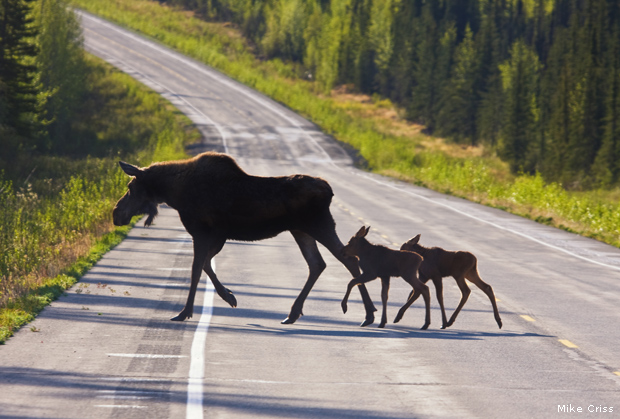
Right through the middle of the Kenai National Wildlife Refuge runs the Sterling Highway – lifeline and only road to the communities of the Kenai Peninsula, plus the only access for Anchorites and tourists to the rich fishing streams, beaches, trails and other natural playgrounds of the Kenai Peninsula. Traffic in summer can be overwhelming with well over a million and a half vehicles a year. When wildlife crosses highways it is dangerous for people and wildlife – all wildlife. Moose, the most frequent victims, are as likely to die in vehicle collisions on Kenai Peninsula roads as to be harvested by hunters. Unlike in hunting, moose that die on the roads tend to be cows and calves needed to sustain the population.
Photo by: Mike Criss, National Wildlife Federation
Right through the middle of the Kenai National Wildlife Refuge runs the Sterling Highway – lifeline and only road to the communities of the Kenai Peninsula, plus the only access for Anchorites and tourists to the rich fishing streams, beaches, trails and other natural playgrounds of the Kenai Peninsula. Traffic in summer can be overwhelming with well over a million and a half vehicles a year. When wildlife crosses highways it is dangerous for people and wildlife – all wildlife. Moose, the most frequent victims, are as likely to die in vehicle collisions on Kenai Peninsula roads as to be harvested by hunters. Unlike in hunting, moose that die on the roads tend to be cows and calves needed to sustain the population.
When the Alaska Department of Transportation began planning to upgrade the 22 miles of highway through the refuge, refuge staff knew they needed to address wildlife concerns. This past summer highway construction was completed, including five highway underpasses for wildlife, one large bridge, and fencing in spots. These are the first wildlife highway structures in Alaska outside of Anchorage. Kenai Refuge Supervisory Biologist John Morton recently gave a talk about these new wildlife improvements and the need. You can view his powerpoint here. To learn more about this issue check out the Refuge Notebook article Morton wrote about this early this year.
The Kenai Refuge’s vision statement on its website states: “The Kenai National Wildlife Refuge will serve as an anchor for biodiversity on the Kenai Peninsula despite global climate change, increasing development, and competing demands for Refuge resources. Native wildlife and their habitats will find a secure place here.” The refuge’s work in securing the wildlife underpasses is one example of refuge staff working to ensure that increased development did not take an unsustainable toll on wildlife. Well done staff!