Open post

Tracking Rufous Hummingbirds’ Travel Itinerary: Tues, 3/17, 5pm AKDT

Presented by Todd Eskelin, Kenai National Wildlife Refuge Wildlife Biologist

Tuesday, March 17, 5 – 6 pm Alaska Daylight Time

  • Soldotna – Todd Eskelin in person with reception to follow. Bring green treats for St. Patrick’s Day if you can. Kenai National Wildlife Refuge Visitor Center, Ski Hill Road.
  • Anchorage – Watch Party at REI’s Community Room, 500 E. Northern Lights
  • Homer – Watch Party at the Alaska Maritime National Wildlife Refuge Visitor Center, 95 Sterling Hwy.  
  • Zoom  Zoom link to be posted HERE

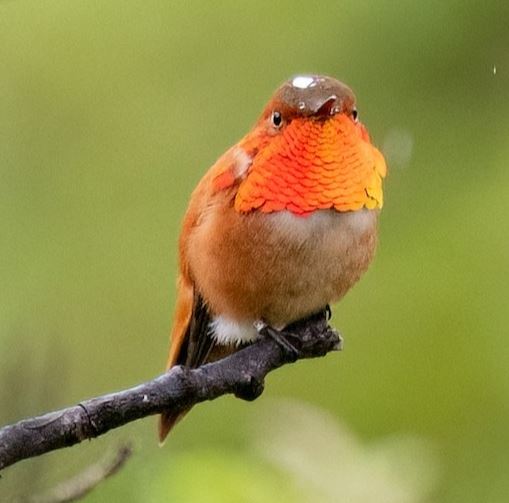
Rufous Hummingbirds are in trouble with their populations down 60% percent in the past 30 years.  They are declining faster than any other western hummingbird.  What is going on for this small bird, the northernmost of all hummingbirds?   

Join us to hear from Todd Eskelin, a Kenai Refuge wildlife biologist and one of only 3 Alaskans permitted to band hummingbirds.   Hear about how Todd and partners are taking their search for answers to the next level with radio transmitters on the birds to better understand migration risks.

Todd has been utilizing traditional banding methods since 2019 to track how many hummingbirds are returning to breeding grounds on the Kenai Peninsula. It is an incredible journey from wintering grounds in Mexico for tiny birds who cannot soar but must beat their wings for every mile. Rufous have the longest migration routes of any hummingbird species.  By recapturing banded birds, researchers have learned that adults are making it back and a few are returning year after year. Why are adults making it back and eventually aging out, but juveniles are not stepping up and replacing them in the breeding pool?
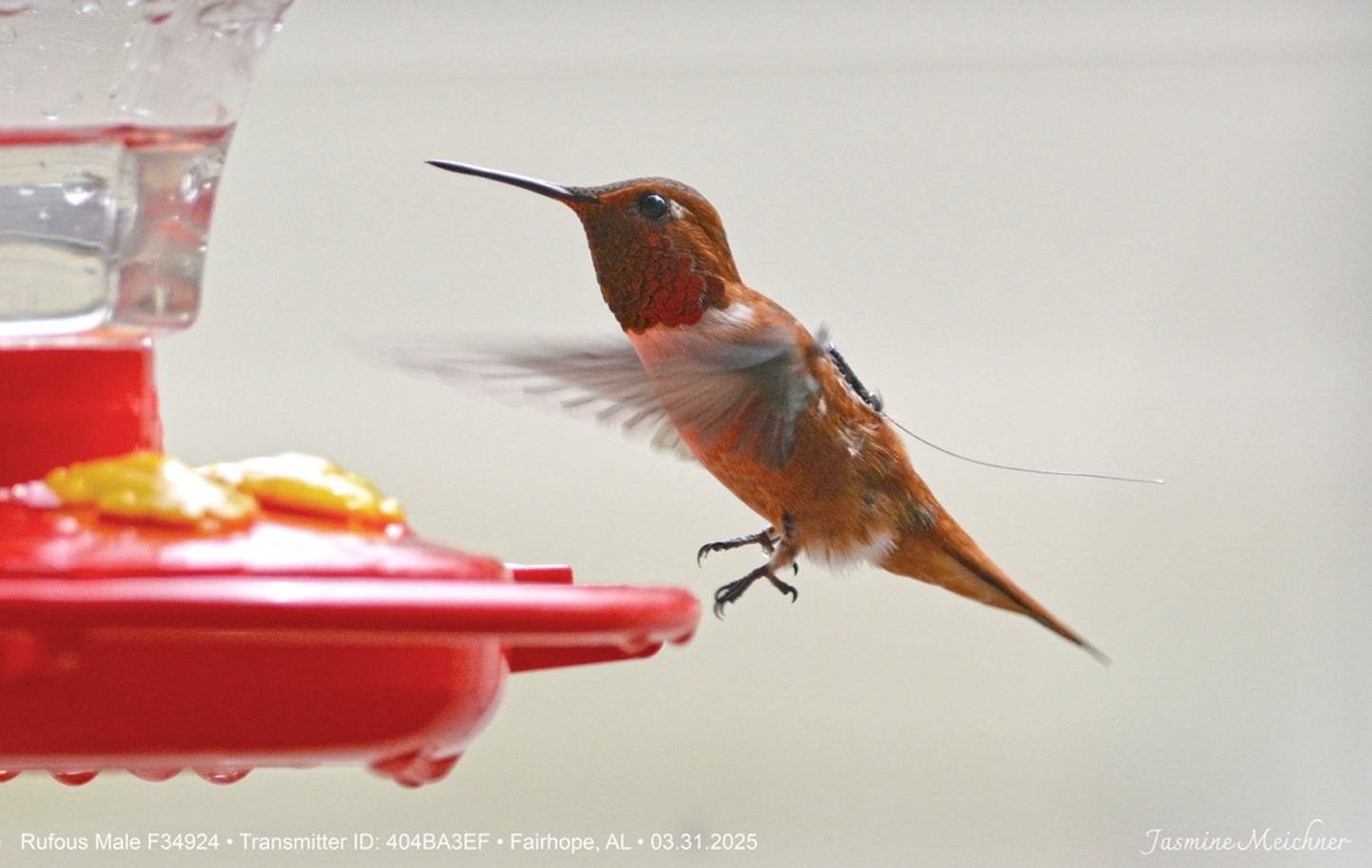


Rufous Hummingbird with transmitter at Alabama Banding station. PC Jasmine Meichner

Now Todd and partners from the Banding Coalition for the Americas and the Alaska Wildlife Conservation Center are ready to launch into the next phase by attaching tiny radio transmitters on Rufous and tracking their migration journey south.  Todd hopes to find out what habitats are important to them and where the risks are during migration. 

They hope to learn some of the important stops and the migration route between Point A on the Kenai Peninsula and the wintering grounds. Maybe it is Seedskadee National Wildlife Refuge in Wyoming or Browns Park Refuge in Colorado that will be a critical connection to the wintering grounds. Come learn how this new technology may be the key to unlocking the mystery of migration and how this can help conserve this important pollinator that has a life history spanning 3 countries. What will it take to save them and how can National Wildlife Refuges play a role in that?
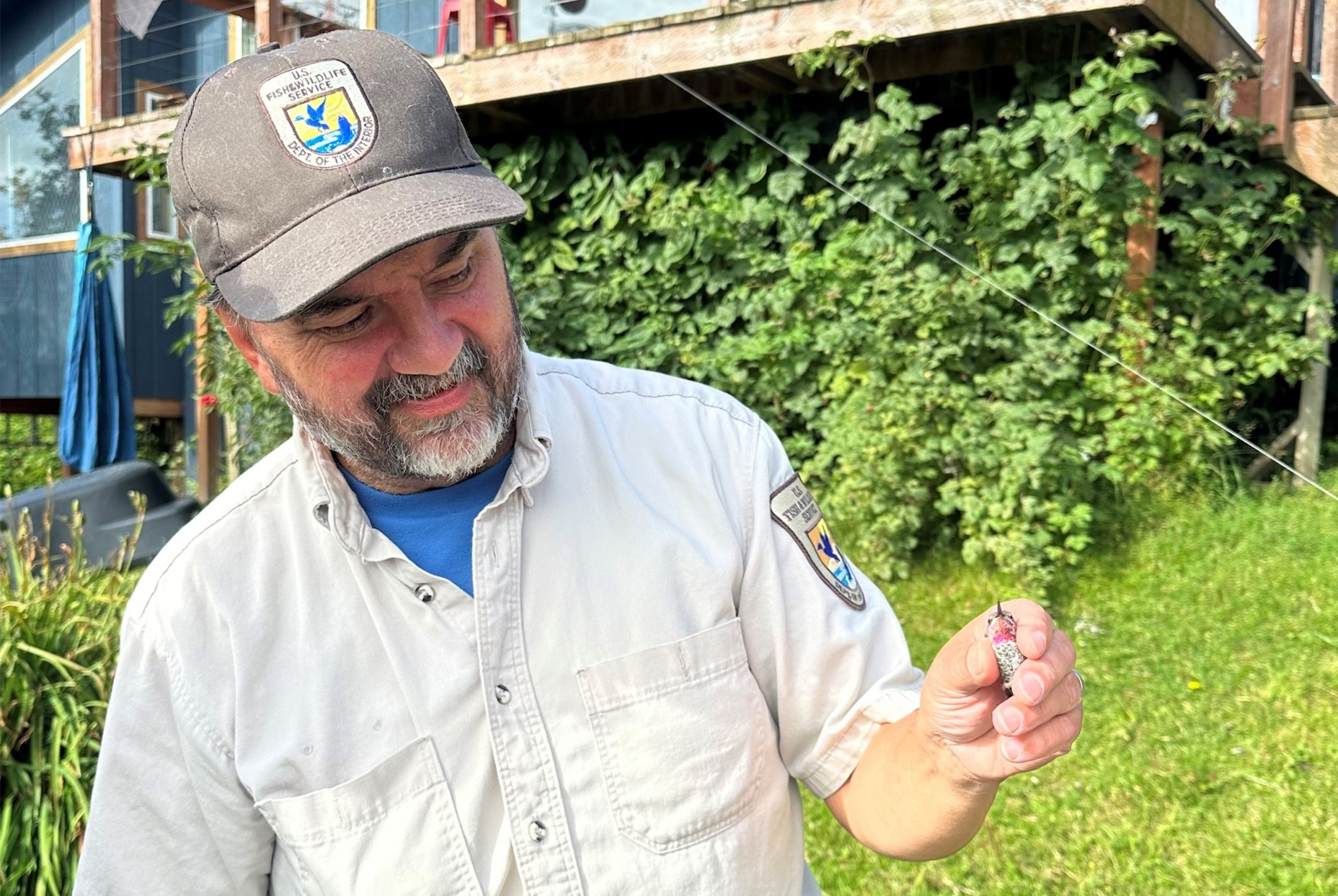


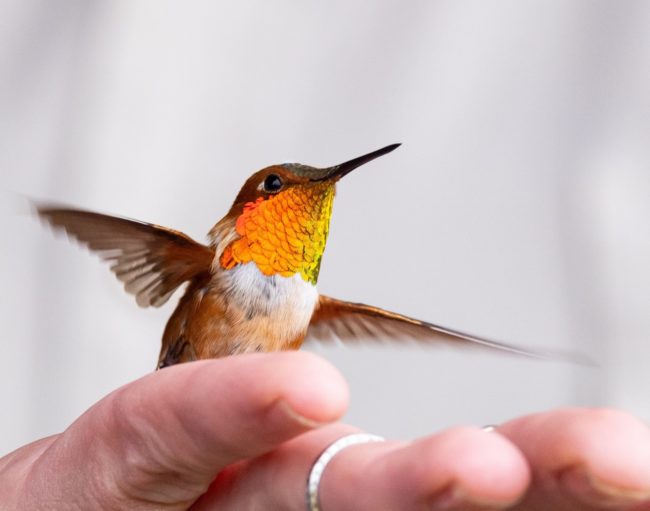
Todd Eskelin with an Anna’s Hummingbird in Homer. This bird is not yet known to breed on the Kenai Peninsula.

Biography

Todd Eskelin may be the only person who has handled a hummingbird and a bald eagle in the same day, so ask him about it.  Todd has traveled all over the state banding birds.  In previous positions, he was the head bander at Alaska Bird Observatory, an eider observer from small planes all over western Alaska, and helped set up MAPS banding in Izembek, Alaska Peninsula and Becharof national wildlife refuges before getting a permanent job at the Kenai Refuge in 2001.

Todd was raised in Soldotna, went off to college at Lewis & Clark in Portland, Oregon but came back to Soldotna.  Family, a chance to volunteer on a Kenai Refuge lynx study during college and love of the landscape drew him back. Todd says that the Kenai Refuge is one of those unique nexus points where multiple biomes and habitats collide and he finds that fascinating.  Todd says “What’s not to love” about a refuge with a high diversity of species, breath taking beauty and a place to feed the family with moose and salmon.

It was Todd’s wife Leah Eskelin, visitor center manager at the Kenai Refuge, who convinced him that his work with hummingbirds would be interesting to people and got him into giving talks and banding demonstrations.  “I’m not even a people person. I just want to do my research and band my birds on a quiet Sunday morning”.  He may not think of himself as a people person, but Todd’s enthusiasm for hummingbirds will be infectious.  Join us.


Open post

Looking Back – Looking Forward; Alaska National Wildlife Refuges – Purpose, Place, & Promise; recording here

Presented by Robin West, Retired Biologist and 14-year Manager of the Kenai National Wildlife Refuge

This program was recorded live on Tuesday, January 20, 2026, at 5 pm Alaska Time


Thanks to everyone who joined us in person and on zoom!

  • Soldotna – Robin West in person at Kenai National Wildlife Refuge Visitor Center, Ski Hill Rd.  Soup supper and booksigning follows.
  • Anchorage  – Watch Party at REI’s Community Room, 500 E. Northern Lights Blvd.
  • Homer – Watch Party at Alaska Maritime National Wildlife Refuge Visitor Center, 95 Sterling Hwy.

From the seat of a canoe on a solo trip on the Yukon River, Robin West had time to think back on a long life and career in Alaska.  Out of that experience came a book and this talk.  It’s part adventure tale and part reflections on the development of national wildlife refuges in Alaska from someone who was there in that heady time when the refuges were just being created and expanded.  Come hear retired biologist and long time Kenai National Wildlife Refuge Manager Robin West relive stories about his thirty-year career with the U.S. Fish and Wildlife Service in Alaska as he shares the highlights of his first book, Thirty of Forty in the 49th: Memories of a Wildlife Biologist in Alaska.  The book captures Robin’s memories as he reflects back in time while on that solo canoe trip on the Upper Yukon River and into the Yukon Flats National Wildlife Refuge in 2019, forty years after he first visited the area.  The trip spawned thoughts of work accomplishments and challenges as well as created memories from this new adventure, including paddling through, and camping along the river during a massive wild fire.  


Robin West in 1979 on the upper Yukon River just a year after coming to Alaska and 40 years before his solo canoe trip.  PC Howard Metsker/USFWS.

Robin’s career in Alaska started during the contentious time of debate over which and how much federal lands in Alaska should be included in new or expanded refuges, parks or forests.  This was prior to the passage of the Alaska National Interest Lands Conservation Act (ANILCA) in 1980.  He will include discussions of this time period and of the lasting impact of the legislation, as well as an overview of Alaska’s conservation history.  His stories also will include first hand views of the evolution of national wildlife refuge management and how current issues like oil and gas development, road construction, and predator control have been addressed historically.  Robin had personal experience with two of our hot button issues – he worked on the coastal plain of the Arctic Refuge now slated for oil development and was manager at Izembek where land has now been traded away for construction of a road through the heart of the refuge.   Additionally, he will touch on other big topics from his tenure including the formation of agency policies, subsistence management, and climate change.

Biography in his own words

Alaska was not a place I ever imagined I would visit, let alone work for the bulk of my career.  Growing up in Grants Pass, Oregon, in the 1960s, my knowledge of the 49th state was what little came from reading the encyclopedia set that held a cherished place on our bookshelf and one movie I saw at the Fairgrounds.  I was intrigued, however, with science and wild animals, and I loved hunting, fishing, and visiting wild places – the wilder the better.  My goal in going to Oregon State University to become a wildlife biologist was only to work somewhere with critters.  While Alaska was not on my radar, when the opportunity came to go north to work after receiving my degree in Wildlife Science, I jumped at the chance.  I bought a one-way ticket to Anchorage and packed my belongings into 2 suitcases, 2 cardboard apple boxes, a backpack and a rifle case.  I never regretted it. 


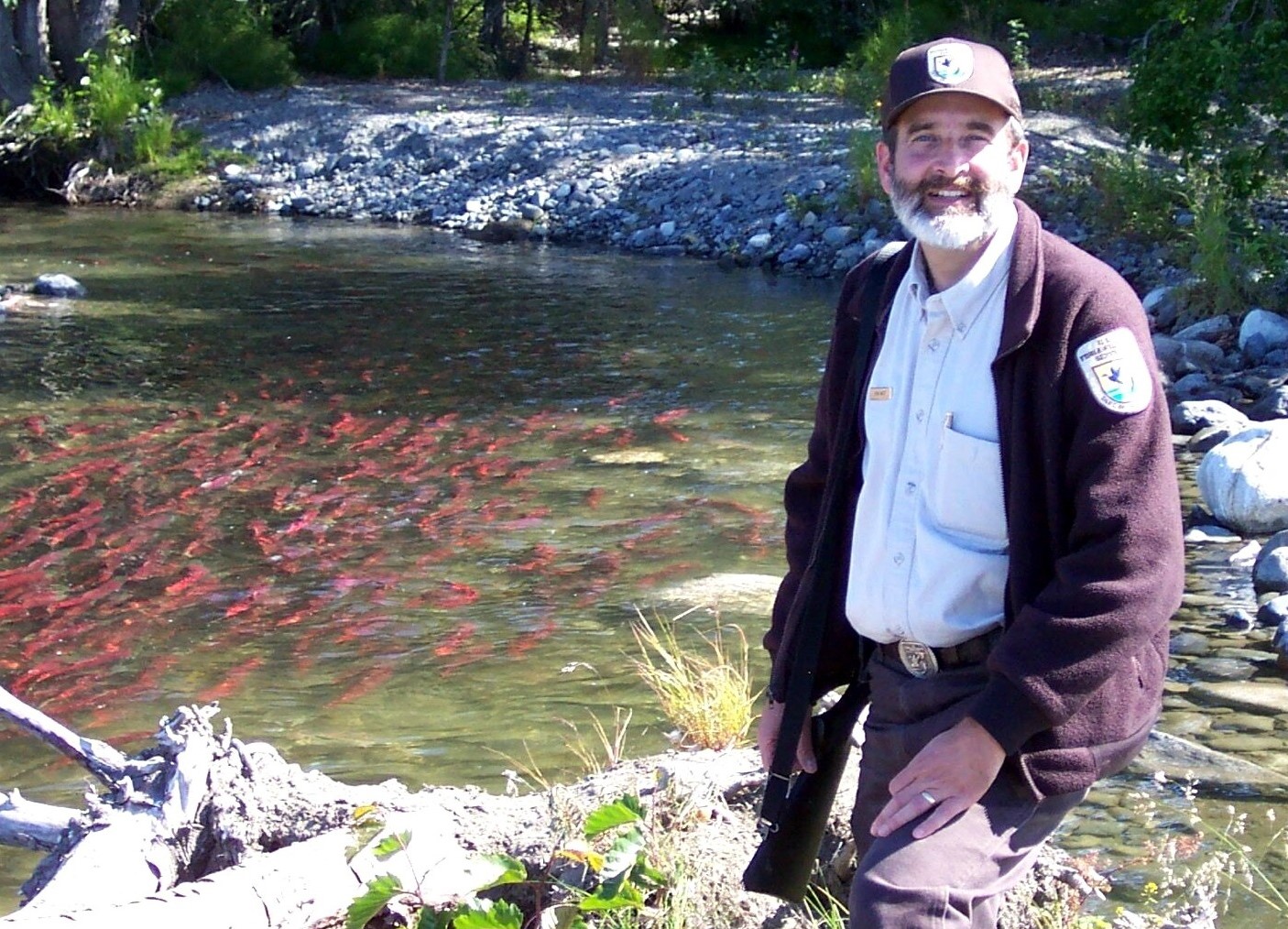
Robin West was Refuge Manager of Kenai National Wildlife Refuge for 14 years from 1995 to 2009.  Sockeye salmon in Bear Creek (Tustumena Lake) on the Kenai Refuge during his years as manager.  PC Gary Sonnevil/USFWS

That was in 1978 to start my career with the U.S. Fish and Wildlife Service in Alaska. For 30 years, I worked in Alaska as a contaminants biologist (working on oil and gas and mining issues), as a fisheries biologist (working in the Arctic National Wildlife Refuge), Assistant Manager at Yukon Flats National Wildlife Refuge, Refuge Manager at Izembek Refuge, a wildlife biologist overseeing the Migratory Bird Program in the Anchorage Regional Office, and as the Refuge Manager of Kenai National Wildlife Refuge.  The last five years of my career were in Portland, Oregon, retiring in 2014 as the Regional Chief of the National Wildlife Refuge System for the Pacific Region with management responsibilities for over 50 million acres of land and water.

I enjoy writing, traveling, wildlife observation and photography as well as hunting, fishing, and canoeing and continue to pursue these interests around the world, having visited all seven continents and over 40 countries.  I have written three other books on wide ranging topics from a fictional work to bowhunting stories.  My wife Shannon and I moved back to Alaska from Oregon in 2023 to be closer to our adult children and grandchildren and now live in Soldotna with our labradoodle “Elu”.

Photo At Top of Page:  Robin at the start of his 2019 solo canoe trip at Eagle on the Yukon River.  PC Alexandra Jefferies