Open post

February 2026 Advocacy Report

By Nancy Lord, Advocacy Committee Chair

Among the latest for the Arctic National Wildlife Refuge is the news that the Department of the Interior (DOI) has now opened the coastal plain (the primary calving grounds for the Porcupine caribou herd) to oil and gas leasing nominations. The call is for nominations and comments (our emphasis) on which tracts should be offered in the first of four required lease sales mandated under the “big beautiful bill.” 

As you will recall, previous leases in the refuge gathered virtually no industry support. The first lease sale, held in January 2021 under the original program, brought in just $16.5 million—less than 1% of the Congressional Budget Office estimates. Most leases were purchased by the Alaska Industrial Development and Export Authority (AIDEA), a public corporation of the State of Alaska. Only two private companies, Knik Arm Services LLC and Regenerate Alaska, participated, and both ultimately relinquished their leases. The second lease sale, held in January 2025, received no bidders and generated no revenue at all. The promise that Arctic Refuge leasing would meaningfully contribute to the federal budget was squashed.

While we continue our Arctic Refuge litigation with coalition partners and the attorneys at Trustees for Alaska, we cannot rest on the possibility of legal success or the chance that industry will continue to be uninterested in the area. We have multiple opportunities to discourage bidding by speaking out loudly and often, including during the just-opened 30-day nominations period.

The Alaska Wilderness League says this: “Executives and investors pay attention to risk. They pay attention to reputational damage. And they pay attention when a project becomes synonymous with controversy and opposition. If bidding on the Arctic Refuge means headlines, protests, investor questions, and sustained public backlash from day one, many companies will decide it simply isn’t worth it.” 

In addition to protesting the lease sales by letting potential bidders and financers know how much we value these refuge lands as refuge, we can submit comments by mail or email  More information on how to submit comments can be found here. Be sure to put in the subject line:  Coastal Plain Leases.  Comments must be received by March 5.

  • By Mail: State Director, Bureau of Land Management, Alaska State Office, 222 West 7th Avenue, #13, Anchorage, AK 99513–7504
  • Email (and this is the whole address) BLM_AKSO_AK932_AKLeasesales@blm.gov

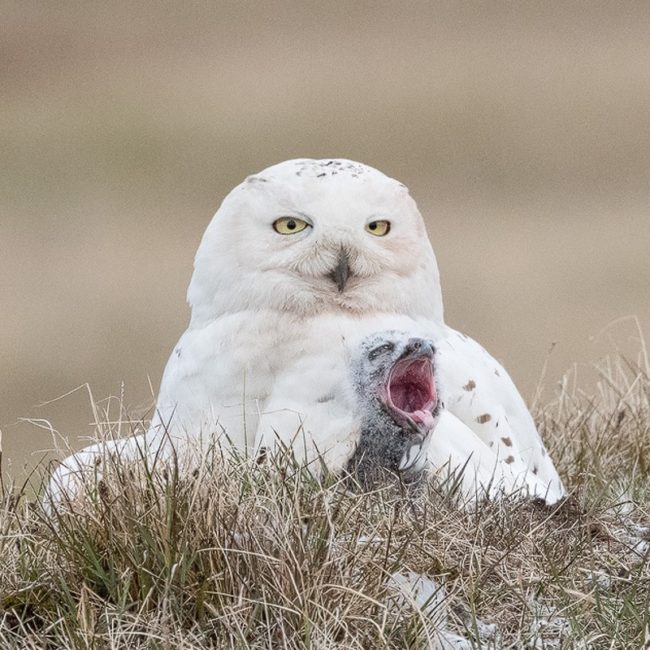
Photo Caption (Above)   The Arctic National Wildlife Refuge is an important bird nursery not just for northern birds like this snowy owl but for birds that migrate south to all 50 states and other continents.  200 species nest on the Arctic Refuge with 70 species specific to the coastal plain (area to be leased for oil and gas). PC:Melissa Groo/FWS

Open post

Before and After: Reflections on the Arctic Refuge on the Occasion of its 65th Birthday

By Marilyn Sigman, Friends President

My first trip to the Arctic Refuge was in 1981. I was a fledgling wildlife biologist, having completed a Master’s degree in wildlife management at the University of Alaska in Fairbanks and snagged my first permanent job as a habitat biologist. I traveled up and down the Haul Road corridor looking for opportunities to protect habitat in advance of a gas pipeline whose construction seemed imminent then. When John Adams, the Director of the Northern Alaska Environmental Center, wasn’t able to lead a planned trip to the Kongakut River in the Arctic Refuge, I jumped at the chance to volunteer.

Two women who had signed up for the trip had been looking forward to being led by one of Alaska’s more dashing and musical environmentalists and were not impressed by my last-minute substitution, especially when I screamed during the bear safety lecture I was giving because I spotted a spider crawling on my shotgun. The gear we ended up with was missing a few things like tent poles and all of the parts for most of the stoves. Fortunately for me, a fanatic fisherman in our group caught and cooked up fresh grayling each morning while I was struggling to get out of my sleeping bag to serve an expected breakfast. Fortunately for us all, the July weather was gloriously sunny. We wandered across the braided floodplain and along ridges amid blooming wildflowers and the calls of birds. As advertised and hoped for, clusters of the Porcupine Caribou – spiky bulls and cows with their newborn calves – came streaming by our tents on the gravel bar, their joints clicking. A pack of wolves passed by one day.

I returned to the Kongakut 40 years later, again in July. This time, I was the one being guided, required only to bring five layers of clothes and my hiking gear. The migration of the Porcupine Herd was again the spectacular wildlife event being promised. We flew over the trails that caribou had ground deep into the tundra, and saw groups clustered like ants on the few remaining snow patches.

By then, I had seen many Alaskan places “before” and “after” they were changed by development or a warming climate. I had flown from Kaktovik to Prudhoe Bay in January and seen how Prudhoe Bay had mushroomed in all directions. The Arctic night was lit up by large trucks plying a spiderweb of ice roads that began just past the western border of the Refuge. I had been fighting for all of those decades to prevent the Arctic Coastal Plain of the Refuge from becoming part of the “afterness”, engulfed in the spiderweb. There was talk, once again, about building a gas pipeline.

We camped again on a gravel bar at the edge of the foothills, and I spent a few more nights falling asleep to the clicks of caribou moving relentlessly. I watched the drama of their crossing the braided rivers at a near-frantic pace. Calves got swept away; cows searched and called for them; even the largest bulls struggled up steep banks. But still they came and moved on, leaving me behind in a more lonesome landscape. I saw grizzlies and wolves, a lone muskox, tufts of qiviut in the willows, a warble fly close up, and a few Arctic birds.

There was a moment when I paused on a hillside above the vast open valley as the others in my group continued their exploration upward onto a ridge in the sunshine and flowery summer exuberance. More than a thousand caribou had just crossed the river and a couple of left-behind yearlings were wandering below me. The ground was intricately patterned. The lichens were dissolving the rocks. Caribou antlers and small mammal bones were slowly crumbling into dust. I felt the lightness of my four decades against the weight of a deep “before.”

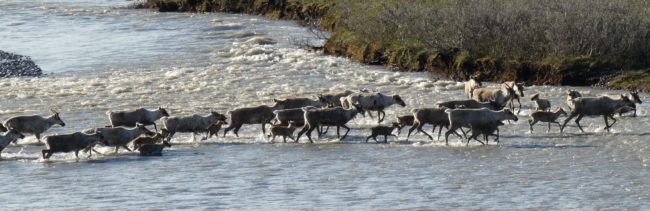
Photo Above
Caribou crossing the Aichilik River on my 2022 trip to the Arctic Refuge.  PC Marilyn Sigman


Open post

Friends Sponsored Trip to the Arctic Refuge

Caribou, Mountains and the Marvelous Marsh Fork: Friends First Sponsored Arctic Refuge Trip a Blast

By Poppy Benson, Friends Board Vice President

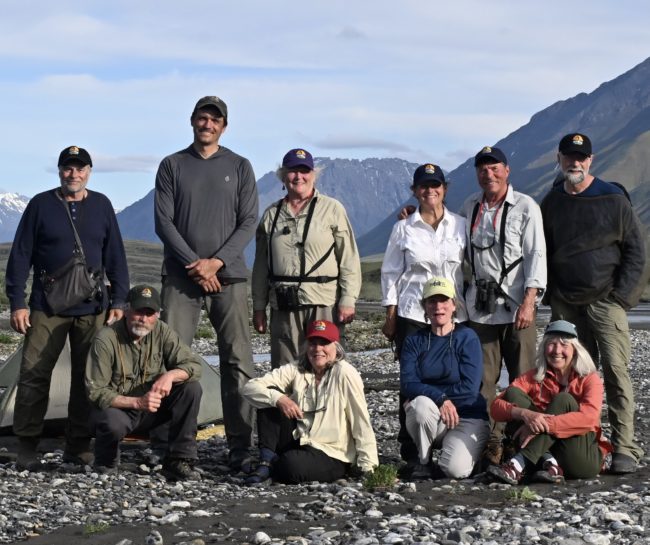
A very compatible and interesting group of eight lucky Friends members from California, Oregon, Fairbanks, Anchorage and Homer signed up quickly enough to get on this trip (it filled in two hours after newsletter publication). pc: Jerry Britten     

Just go!  Just go to the Arctic Refuge.  Our trip was too much fun.  Caribou every day, the tundra in full bloom, mountains more magnificent than any of us expected, wolverine tracks in the mud, coral fossils from an ancient sea on every gravel bar, floating the splashy Marsh Fork of the Canning River, a golden eagle camp flyover, Marv and Jerry’s first grayling, springs and a secret canyon.  This trip exceeded all of our expectations.

 
We flew over the Continental Divide in a 4-seater Cessna 185.  The Marsh Fork drains north, to the Arctic Ocean. pc: Nancy Deschu

Our adventure started at refuge headquarters in Fairbanks where Arctic Refuge Wilderness Specialist and sage of the Arctic, Roger Kaye, filled us in on the history of the Refuge.  This was a Friends trip so getting the inside scoop on the Refuge was part of the deal.  Later, we spent an hour with Arctic Refuge Manager, Merben Cebrian.   Next, we met our wonderful guides, Aaron Lang and Chris Mannix from Wilderness Birding Adventures who knew every bird and flower and were a real comedy act.  Then two flights in progressively smaller planes before we landed on a bouncy tundra strip to spend our first night beside the river under the midnight sun. 


Paddle raft teamwork is fun.  We took turns paddling or riding in the oared boat which was better for photography. pc: Poppy Benson

For the next 10 days we alternated a day of river rafting with a day of hiking with great weather and minimal bugs.  There was work – dragging the boats across the aufeis to get to the river the first day, hauling gear, repairing the gravel bar “landing strip” so our pilot could pick us up at the end; and there were joyous experiences  – wading into the cave to discover the stream did not spring from the earth but fell from the sky into the cave in a hidden waterfall, watching a caribou succeed in crossing the river after a long struggle against the current, seeing the big blonde grizzly swim the river and spotting the northern shrike chick its parent was noisily defending.   It was heaven.

Flowers, birds, views and loafing were highlights of our hiking days  pc: Poppy Benson

This was the first time Friends attempted to “sponsor” a trip to a remote refuge.  The point was to get Friends out on the Arctic Refuge so we had a chance to form our own bond with the land and its wildlife.  All of us felt touched by the grandeur of the place.  The landscape was incredibly vast and wild and needs our care and protection. 


Carol Harding from Homer said “Seeing the caribou moving north every day,“ was the best part of the trip for her. For Marv Ritter of Oregon it was watching the lone caribou fight the river current.  Caribou were part of every one of our days.  pc: Poppy Benson.

Based on this trip’s success and the demand to get out on refuges, we are planning a summer 2024 Yukon Delta National Wildlife Refuge raft trip.